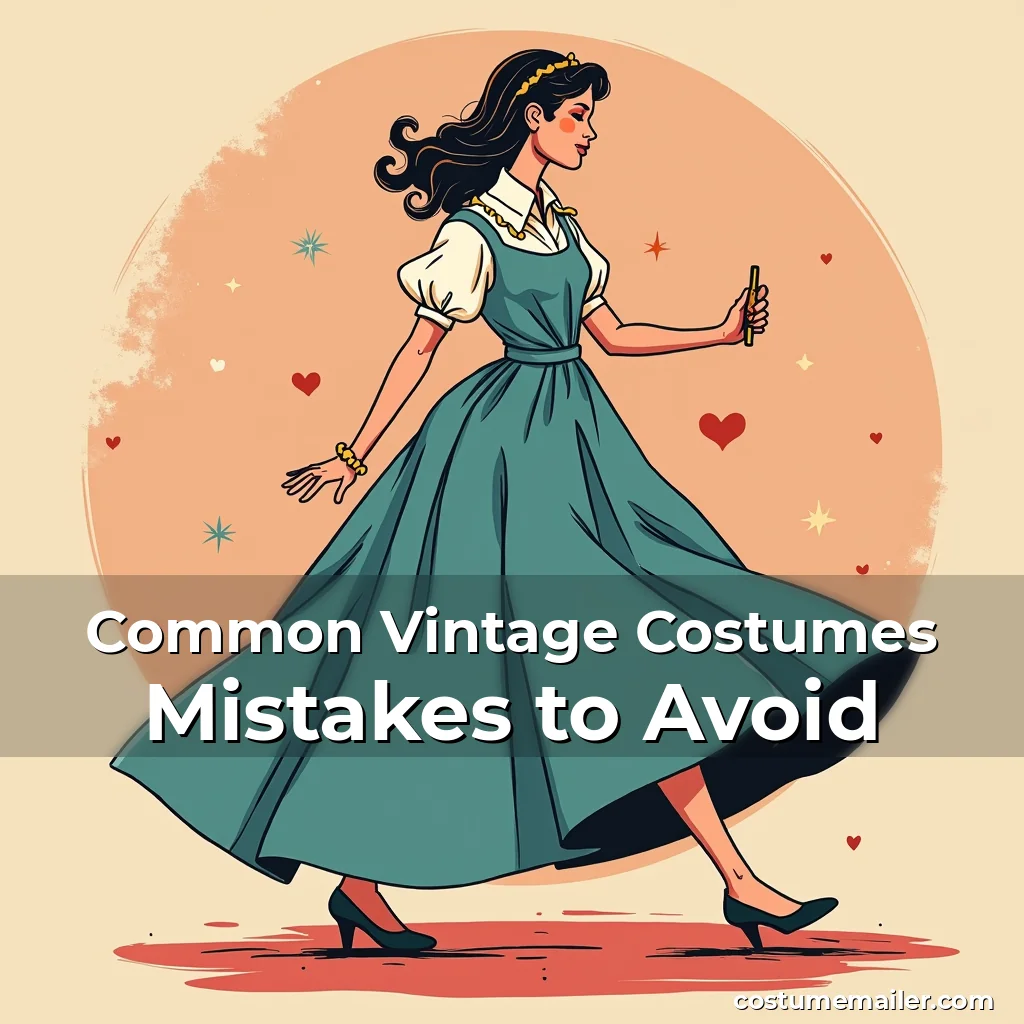
Common Vintage Costumes Mistakes to Avoid
Vintage costume enthusiasts often find themselves captivated by the elegance and charm of past eras. However, even seasoned collectors can fall prey to common pitfalls that might ruin their vintage finds.
From misidentifying periods to mishandling delicate fabrics, these mistakes can devalue cherished pieces or lead to unnecessary expenses. By understanding these errors, you’ll better protect your collection and enhance your appreciation for historical fashion.
The Dangers of Misidentification
Misidentifying a costume’s era is one of the most frequent blunders among vintage collectors. This mistake can lead to incorrect valuation, improper care, and confusion when trying to sell or display items.
A simple error in date could mean missing out on rare pieces or overpaying for an item mistakenly believed to be from a different period. For example, a dress labeled as Art Deco might actually belong to the Victorian era.
- Paying for authenticity: Many sellers claim authenticity without proof, leading buyers to spend unnecessarily on verified pieces.
- Confusing similar styles: Fashion trends often repeat across decades, making accurate identification challenging.
- Lack of research skills: Inadequate knowledge about historical context increases the risk of costly mistakes.
To avoid misidentification, invest time in learning key characteristics of each decade. Study fabric types, stitching techniques, and accessory materials to distinguish genuine vintage pieces accurately.
Familiarize yourself with hallmark features such as corsetry construction differences between the Edwardian and Roaring Twenties periods. These subtle distinctions help prevent expensive miscalculations.
Improper Fabric Care and Handling
Many vintage costume owners neglect proper storage conditions, risking permanent damage to fragile textiles. Exposure to sunlight, humidity, and improper cleaning methods can degrade historic garments significantly.
Delicate fabrics like silk and wool require special handling that modern clothing rarely demands. Even minor negligence can cause irreversible harm through color fading or structural weakening.
- Direct sun exposure: Prolonged light exposure leads to color degradation in dyes used during earlier centuries.
- Inappropriate climate control: Fluctuating temperatures accelerate fabric deterioration processes naturally occurring over years.
- Incorrect washing practices: Using harsh detergents destroys natural fibers present in many antique costumes.
Implement proper archival storage solutions using acid-free tissue paper and breathable cotton garment bags. Maintain consistent room temperature levels around 68°F (20°C) with moderate humidity below 50% RH.
Before any cleaning attempt, consult textile conservators who specialize in pre-1900s fabrics. Professional advice ensures preservation rather than destruction of irreplaceable pieces.
The Pitfalls of Over-Cleaning Vintage Garments
Over-cleaning remains a prevalent issue where well-meaning owners try to restore aged costumes back to pristine condition. This approach frequently results in irreversible alterations to original materials.
Historic garments were designed to withstand wear over generations but not chemical treatments applied today. Modern dry-cleaners may use solvents incompatible with older fabric compositions.
- Detergent residue buildup: Repeated washing leaves behind chemicals that weaken fiber integrity permanently.
- Color fastness issues: Some vintage dyes react unpredictably under current cleaning protocols.
- Structural damage risks: Aggressive cleaning methods loosen seams created using traditional tailoring techniques.
If necessary, seek expert conservation services specializing in historical textiles. They employ gentle yet effective restoration approaches respecting original craftsmanship.
Remember that patina—the natural aging process—is part of what gives vintage costumes their character and value. Preserving authentic signs of age enhances both historical accuracy and collectibility potential.
Neglecting Structural Integrity During Restoration
Restoration efforts aimed at preserving vintage costumes often overlook critical aspects of original construction techniques. This oversight can compromise both aesthetic appeal and functional durability.
Modern restorers sometimes replace original components with contemporary alternatives, altering the piece beyond its historical significance. Such changes diminish the garment’s authenticity and marketability.
- Reinforcing weakened areas improperly: Using synthetic thread instead of matching historical stitches weakens overall structure artificially.
- Replacing original closures: Substituting zippers or snaps for historically appropriate buttons disrupts visual coherence.
- Altering proportions incorrectly: Resizing garments based on modern standards distorts period-specific silhouettes.
To maintain integrity, work exclusively with professionals trained in period-appropriate restoration methodologies. They utilize authentic materials and replication techniques mirroring those used originally.
When restoring, document every modification thoroughly so future caretakers understand which elements are original versus restored additions. Transparency preserves the garment’s provenance for scholarly study or resale purposes.
Ignoring Historical Context in Costume Design
Many vintage costume designers fail to consider broader cultural influences shaping fashion choices within specific eras. This disconnect creates anachronistic designs lacking true historical fidelity.
Clothing was never isolated from social norms; class divisions, technological advancements, and global events profoundly impacted what people wore daily. Ignoring these factors leads to inaccurate representations.
- Social stratification indicators: Fabrics, patterns, and embellishments signified socioeconomic status during various periods.
- Technological limitations: Early twentieth-century manufacturing constraints dictated garment shapes and available materials.
- Global trade impacts: Imported textiles influenced regional fashion trends differently depending on political climates.
Research primary sources like fashion magazines, photographs, and personal accounts to inform design decisions accurately. Understanding societal pressures helps create more nuanced, historically grounded interpretations.
Consider consulting historians or museum curators specializing in costume studies before finalizing projects involving historical themes. Their expertise provides invaluable perspective ensuring contextual relevance.
The Risks of Improper Display Techniques
Displaying vintage costumes without considering environmental factors poses significant threats to their longevity and appearance. Incorrect lighting, mounting, and space allocation can rapidly deteriorate once-pristine garments.
Exposure to ultraviolet rays damages dyes and accelerates fabric breakdown. Poorly ventilated spaces promote mold growth while inadequate support causes physical deformation.
- Lighting hazards: UV radiation fades colors irreversibly regardless of subsequent protective measures.
- Mounting dangers: Heavy hangers strain weak seams intended only for casual movement during active use.
- Space management issues: Crowded displays increase chances of accidental contact causing abrasion injuries.
Use neutral-colored exhibit cases with controlled internal environments featuring filtered lighting systems. Ensure adequate spacing prevents accidental collisions between displayed items.
For long-term exhibitions, rotate featured costumes regularly to minimize cumulative stress effects on individual garments. Document all display parameters meticulously for reference during future installations.
Underestimating Cultural Sensitivity Issues
Some vintage costume creators inadvertently reproduce offensive stereotypes or culturally insensitive motifs associated with particular groups. These oversights can generate controversy and alienate communities connected to affected cultures.
Cultural appropriation occurs when elements from marginalized populations are commercialized without acknowledging their origins or significance. This practice disrespects traditions while profiting from them unjustly.
- Historical inaccuracies: Mislabeled tribal attire perpetuates harmful misconceptions about indigenous peoples’ lifestyles.
- Ethnic caricatures: Exaggerated racial features reduce diverse identities to simplistic visual tropes.
- Ritual misuse: Wearing ceremonial garb outside its spiritual context violates sacred customs.
Conduct thorough background research on any culture represented in costume design. Engage members of relevant communities for guidance regarding appropriate usage scenarios.
Whenever possible, collaborate directly with artisans from the originating culture. Their firsthand knowledge ensures respectful representation free from exploitative tendencies.
Conclusion
Awareness of these common vintage costume mistakes empowers collectors to safeguard their investments effectively. Recognizing potential errors allows for proactive prevention strategies tailored specifically toward each type of risk identified above.
By prioritizing careful selection, proper maintenance routines, and ethical considerations, enthusiasts contribute positively to preserving our shared sartorial heritage responsibly. Embracing these best practices enriches everyone’s experience within the vintage costume world while protecting tangible links to our collective history.

news is a contributor at CostumeMailer. We are committed to providing well-researched, accurate, and valuable content to our readers.
You May Also Like
Related Articles